
Object history
People do not realize they are leaving a growing amount of tracks because of digitalisation. Phone calls are being stored and internet traffic is being logged. People are not just blind for the digital history these digital tracks form, they are also blind for history in the analogue world.
Even without RFID, objects have their own history. They all lead their own life. Some are used intensively and might build very strong relationships with people. Others are destined to a lonesome stay on shopping shelves. Objects collect human emotion and experiences. This emotional history is invisible to strangers.
While browsing a store with second-hand goods I found a very old plastic military toy. The turret was broken off and it only had 1 wheel. My first thoughts were, how can they charge € 0,25 for a tank like this? Would anyone ever buy such a worn toy? But then I thought about all the things the object might have been gone through.
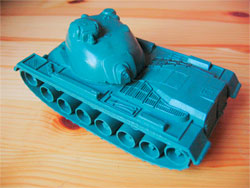
My project’s goal is to let people look at objects differently, by making the unforeseen emotional history visible. In this project users are able to digitally construct that emotional history by telling their own audiovisual stories about the objects. An object looking worthless at first sight will be appreciated when listening to stories about others’ experiences. Hidden emotions are revealed.
With a future pervasive RFID infrastructure and mobile devices capable of interacting with the ‘digital’ objects, this hidden emotional history can be revealed. The digital body RFID is creating, can build a collective emotional memory, making it possible for objects to carry the story of their own history. This is the main point of the supply chain application of RFID.
History parallel
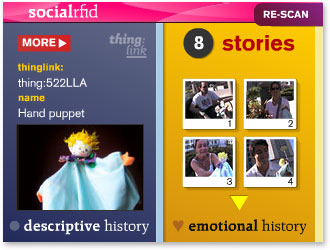
A mobile device is used to view emotional stories about the object. A critical stance on the supply chain history collection is taken, and a parallel is created between the descriptive history of EPCglobal or Thinglink data and the emotional history of object stories: digital history and analogue history. The user can go for the descriptive history and retrieve manufacture, transport, retail or usage information. On the other side of the screen the parallel of emotional history is displayed. A list of currently added stories is displayed here. The user can then select a story and listen to it. In the end the goal is to be able to expand the collection of stories about an object by letting the users of the system record their own.
